Robust Localization and Spatial 3D Perception in Challenging Environments

Biography
Currently, I am a Ph.D. candidate at ETH Zurich, Robotic Systems Lab, where I work on robust spatial 3D perception and state estimation for robot autonomy in challenging real-world environments. My recent research spans localization, mapping, and 3D perception for mobile robots deployed in the wild.
My research mainly focuses on robust localization and spatial 3D perception in perceptually degraded environments using optimization and data driven methods. My solutions have been employed in real-world robotics deployments in forests, volcanic terrain, lava caves, mountain ranges and other harsh environments. Specifically, I develop degeneracy-aware LiDAR registration and multi-modal state-estimation frameworks, with a strong focus on localizability, observability, and failure-aware optimization under real-world conditions. My recent publications further explore challenges in real-world robotics through advanced perption payload design and legged-robot specific dataset collections. Additionally, I am increasing the scope of my focus to efficient, incrementally updated, and context-aware spatial 3D representations, including both implicit and explicit scene representations for consistent local and global scene understanding.
For more information, please refer to my Curriculum Vitae.
- Robust Localization and Mapping
- Real-time 3D Perception on Edge Compute
- Spatial 3D scene Representations
- Multi-modal Sensor Fusion
-
MSc in Robotics, Systems and Control
ETH Zurich
-
BSc in Control and Automation Engineering
Istanbul Technical University
-
BSc in Mechanical Engineering
Istanbul Technical University
Updates
2026
The GrandTour dataset journal article is now under review for IJRR.
My most recent work (equal contribution with my co-PI, Jonas Frey) GrandTour: A Legged Robotics Dataset in the Wild for Multi-Modal Perception and State Estimation is currently under review (2026).My journal publication Informed, Constrained, Aligned was published in IEEE Transactions on Field Robotics is going to be presented at ICRA 2026. [IEEE Xplore]
Informed, Constrained, Aligned: A Field Analysis on Degeneracy-aware Point Cloud Registration in the Wild was accepted in IEEE Transactions on Field Robotics (2025) and now going to be presented in ICRA 2026.The IEEE TRO submission Holistic fusion: Task-and setup-agnostic robot localization and state estimation with factor graphs is now accepted! [arXiv]
The work I co-authored, Holistic Fusion: Task- and Setup-Agnostic Robot Localization and State Estimation with Factor Graphs, has been conditionall accepted.BIEVR-LIO, a work I have collaborated on is under review for RSS 2026.
The work I co-authored, BIEVR-LIO: Robust LiDAR-Inertial Odometry through Bump-Image-Enhanced Voxel Maps, is under review for RSS 2026.A new IEEE magazine Large-Scale Autonomous Gas Monitoring for Volcanic Environments: A Legged Robot on Mount Etna is now under review. [arXiv]
The work I co-authored, Large-Scale Autonomous Gas Monitoring for Volcanic Environments: A Legged Robot on Mount Etna, is currently under review (2026).The work of my student One-Shot Badminton Shuttle Detection for Mobile Robots is under review for IEEE RAP.
A work I supervised, One-Shot Badminton Shuttle Detection for Mobile Robots, is currently under review for RAP (2026).2025
My analysis work Informed, Constrained, Aligned was published in IEEE Transactions on Field Robotics is now published in IEEE T-FR. [IEEE Xplore]
Informed, Constrained, Aligned: A Field Analysis on Degeneracy-aware Point Cloud Registration in the Wild was published in IEEE Transactions on Field Robotics (2025).CaRLi-V is under review for IEEE RAP.
A work I supervised, CaRLi-V: Camera-RADAR-LiDAR Point-Wise 3D Velocity Estimation, is currently under review (2025). [arXiv]ForestLPR received a CVPR 2025 Paper Highlight. [CVF OpenAccess]
The work I co-authored, ForestLPR: LiDAR Place Recognition in Forests Attentioning Multiple BEV Density Images, received a Paper Highlight at CVPR 2025. [CVF OpenAccess]The continuous-time state estimation survey was published in IEEE T-RO. [IEEE Xplore]
The work I co-authored, Continuous-Time State Estimation Methods in Robotics: A Survey, was published in IEEE Transactions on Robotics (2025).Boxi was presented at RSS 2025. [PDF]
Boxi: Design Decisions in the Context of Algorithmic Performance for Robotics was published in Robotics: Science and Systems (RSS), 2025.ForestLPR was published at CVPR 2025.
The work I co-authored, ForestLPR: LiDAR Place Recognition in Forests Attentioning Multiple BEV Density Images, was published at CVPR 2025.Diffusion-based robust LiDAR place recognition was published at ICRA 2025. [IEEE Xplore]
A work I supervised, Diffusion Based Robust LiDAR Place Recognition, was published at ICRA 2025.2024
Sep. 2024 – Dec. 2024: Research Exchange at MIT SPARK Lab (MA, USA).
I worked on spatial 3D mapping with Gaussian Splatting methods for a generalizable robotic mapping pipeline.X-ICP was published in IEEE Transactions on Robotics.
X-ICP: Localizability-Aware LiDAR Registration for Robust Localization in Extreme Environments was published in IEEE Transactions on Robotics (2024).Global Path Planning for Autonomous Vehicles in Orchards and Vineyards was published at RoMoCo 2024.
The work I co-authored was published at the 13th International Workshop on Robot Motion and Control (RoMoCo), 2024.Autonomous Forest Inventory with Legged Robots was published.
The work I co-authored, Autonomous Forest Inventory with Legged Robots: System Design and Field Deployment, was published in 2024.2023
Feb. 2023: I started my Ph.D. at ETH Zurich, Robotic Systems Lab.
My Ph.D. research focuses on robust spatial 3D perception in geometrically degenerate environments to enable robot autonomy.Scientific exploration of challenging planetary analog environments was published in Science Robotics.
The work I co-authored, Scientific exploration of challenging planetary analog environments with a team of legged robots, was published in Science Robotics (2023).I began supervising student projects and theses at ETH Zurich.
I started supervising master theses and semester projects at ETH Zurich (2023–Present).2022
May. 2022: I completed my M.Sc. in Robotics, Systems & Control at ETH Zurich.
My master’s thesis focused on X-ICP, a localizability-aware LiDAR registration framework for robust localization in extreme environments.May. 2022 – Feb. 2023: I worked as a Scientific Researcher at ETH Zurich, Robotic Systems Lab.
I conducted independent research on robust localization and mapping for legged robots and developed the X-ICP framework with large-scale evaluation.Sep. 2022 – Jan. 2023: I was a Teaching Assistant for Robot Dynamics at ETH Zurich.
I supported lectures and exercises, and prepared and graded assignments and exams for the Robot Dynamics course.Deep learning frameworks for control systems was published in Applied Intelligence.
Deep learning frameworks to learn prediction and simulation focused control system models was published in Applied Intelligence (2022).I started teaching in the ETH Zurich Robotics Summer School.
I began contributing as a lecturer/teaching assistant in Robotics Summer School activities at ETH Zurich (2022–Present).2021
Mar. 2021 – Oct. 2021: I was a Perception Engineering Intern at ANYbotics AG.
I worked on global initialization and robust localization/mapping for ANYmal robots, including LiDAR-camera-IMU sensor fusion odometry and field experiments.2020
FOLLY was published in Aerospace Science and Technology.
Design and development of FOLLY: A self-foldable and self-deployable autonomous quadcopter was published in Aerospace Science and Technology (2020).2019
Sep. 2019: I started my M.Sc. in Robotics, Systems & Control at ETH Zurich.
I began graduate studies in Robotics, Systems & Control at ETH Zurich (completed in May 2022).Sep. 2019 – Mar. 2021: I worked at ETH Zurich ASL as a Student Mechanical Designer.
I redesigned the Super Mega Bot platform for the DARPA Subterranean Challenge, focusing on robustness, maintainability, and mechanical optimization.Sep. 2018 – Jun. 2019: I worked as a Research Assistant at Istanbul Technical University.
I worked on deep learning methods for non-linear system identification and time-series prediction, which later led to a journal publication.Jun. 2019: I completed my B.Sc. in Control & Automation Engineering.
I graduated from Istanbul Technical University as the top student in the program (1st/105).I received the Top Graduate award in Control & Automation Engineering.
I was awarded Top Graduate in Control & Automation Engineering at Istanbul Technical University (1st/105).2018
Jun. 2018: I completed my B.Sc. in Mechanical Engineering.
I graduated from Istanbul Technical University as the top student in the program (1st/81).Jun. 2018 – Sep. 2018: I was a Research Intern at Imperial College London.
I developed machine-learning pipelines using EEG, EMG, and video data to estimate human stress levels for human-robot interaction.FOLLY was published at CEIT 2018.
FOLLY: A Self Foldable and Self Deployable Autonomous Quadcopter was published at CEIT 2018.I received the Best Paper Award at CEIT 2018.
I received the Best Paper Award for the FOLLY paper at the Conference on Control Engineering and Information Technology (CEIT).I received the Top Graduate award in Mechanical Engineering.
I was awarded Top Graduate in Mechanical Engineering at Istanbul Technical University (1st/81).2015
Sep. 2015: I started my B.Sc. in Control & Automation Engineering.
I began my second bachelor’s degree at Istanbul Technical University (completed in Jun. 2019).2013
Sep. 2013: I started my B.Sc. in Mechanical Engineering.
I began my undergraduate studies in Mechanical Engineering at Istanbul Technical University (completed in Jun. 2018).Featured Publications
Looking for the latest work?
My most recent publications and updates are available on my CV and Google Scholar.


Experience

- Research on spatial 3D mapping with Gaussian Splatting methods for a generalizable robotic mapping pipeline.


Robotic Platforms

ANYmal C
ANYmal is a unique legged robot that provides reliable industrial solution with autonomous robot inspection.

ANYmal D
ANYmal-D is the next generation ANYmal equipped with 6 D435 depth cameras, 2 Wide-angle RGB cameras, a IMU and a VLP-16 LiDAR in addition to the joint encoders.
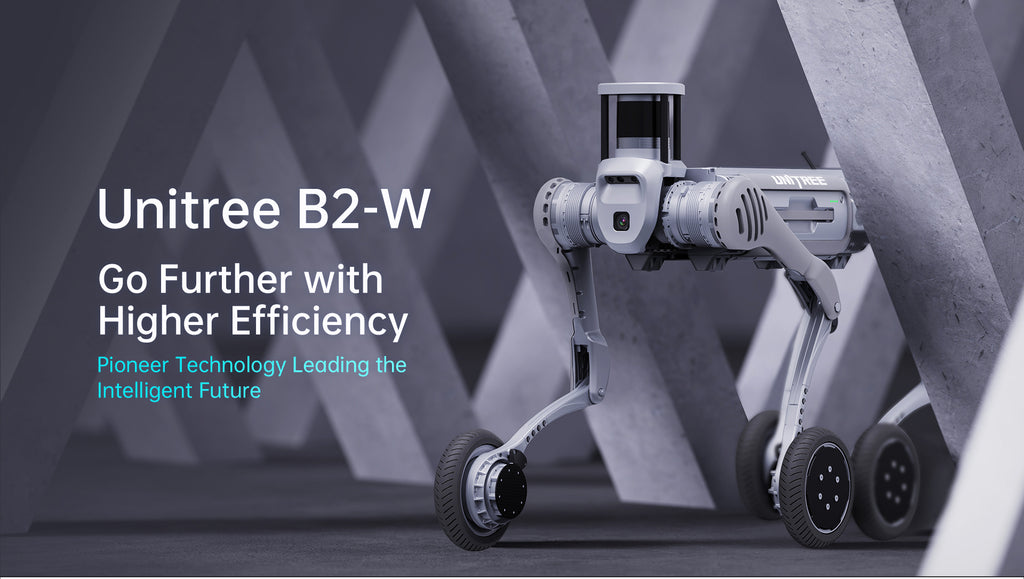
Unitree B2-W
Unitree B2-W is a wheeled quadruped robot designed for high-efficiency mobility and industrial applications, with a focus on stable operation in complex terrain and autonomous inspection workflows.

ALMA
ALMA is an ANYmal that is equipped with a robotic arm designed for articulated locomotion and manipulation.

Unitree A2-PRO
Unitree A2-PRO is an industrial quadruped robot platform for inspection, logistics, and emergency-response use cases, with dual industrial LiDARs, dual hot-swappable batteries, and an optional wheel-leg configuration for mixed-terrain mobility.

SuperMegaBot
SuperMegaBot is a wheeled automonous ground robot for eduation, and research in autonomous inspection. The current mechanical design is a product of my work at ASL as a HiWi.
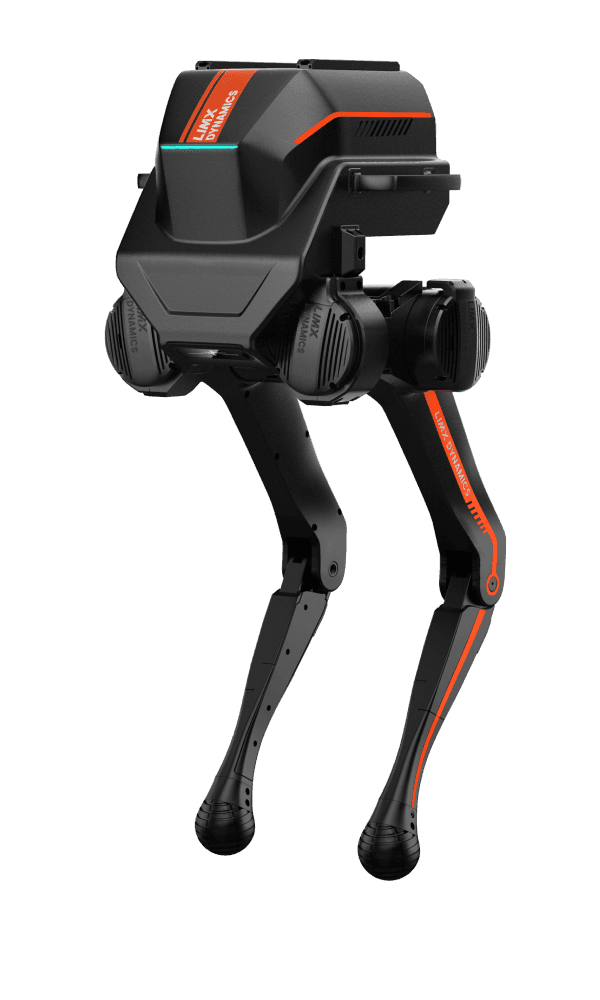
TRON 1
TRON 1 is a multi-modal biped robot platform for humanoid motion control and embodied AI research, featuring a three-in-one modular foot-end system (point-foot, sole, and wheeled) plus an open SDK for rapid algorithm development and RL validation.

Folly
Folly is a self-foldable and self-deployable drone designed and produced during my BSc Thesis in Mechanical Engineering which is under patent protection. Folly is a ~ 1 kg quadcopter with 18 minute battery life that is designed for confined space applications.
Contact
- Rämistrasse 101, 8092 Zurich
- tutuna@ethz.ch
- Connect with me